


Jesus: #1, A Historical Figure, or Simply a Myth?

The purpose and intent of this essay is to look into the claims of two sides, those who believe the Christian Messiah, Jesus, was a historical figure and those who do not. My intent is not to prove or disprove the claims of both sides, nor to present if the religious claims attributed to him are real or not, as the religious aspect is not what we will examine, but more of an historical approach. I will present cases from scholars representing different backgrounds, Jewish, Islamic, Christian and secular, all scholars that will be cited are well respected within their field and the academic world. Can we know if a historical Jesus existed?
What kind of sources can we use to determine this? Can we use the Bible as a legitimate source knowing there are many historical inaccuracies contained within it? Scholars are confident that we can know whether there was or was not a historical Jesus and that we can determine this by using the bible alongside outside biblical sources, contrasting what we know as fact, and what we know was part of regional myths. Professor Dale Martin, a Christian, and Professor Bart Ehrman, an agnostic - atheist, both strongly state we can work out myth from history and come to a firm conclusion.
I will present the historical times of the regions that concern the rise of Christianity, detailing the daily lives of the peoples, their religious beliefs and views concerning other faiths which we can historically verify and leave all hearsay out. I hope the reader finds the information informative and is able to come to a clear view whether there was or was not a historical Jesus, regardless my point of view which I will keep hidden until the end as I had no firm stance either way until near the end of my research. Whether one believes in a historical Jesus or not, I hope this essay will shed light on topics that confuse many people on the issue and it will allow them to form their opinion with great historical information and scholarly points of view. I will provide a little bit of background on the regions concerning our investigation so we can better understand the time period we are looking at. Enjoy!

The Mediterranean in the 1st Century: The Mediterranean World
was centered on Rome, the superpower that controlled most of Europe,
Egypt, and extending its power all the way to the Middle East. There was nothing that happened without Rome knowing and Rome reacting. During the 1st Century C.E., Rome was flourishing, expanding its empire and adopting new gods and traditions.
Rome was a progressive country for its time, originally taking
from the Greeks in religion and political structure, and adapting
it as their own. Known for its remarkable multicultural structure,
Romans had integrated different polytheistic religions into their
own lives, accepting instead of rejecting other cultures deities,
well known for the worship of these foreign gods, whether in
their homes, in temples, or at alters. Roman citizens saw these
other gods as another outlet rather than only worshiping their
own gods, or one god, as Romans did not have a real concept of
a monotheistic deity. For the most part the Roman citizens did
not persecute followers of other religions, in fact, they did not
want to offend other deities and bring ill luck upon themselves.
The polytheistic worship of gods was not uncommon to
Romans, and thus no need to reject other gods, unlike in one of
its smaller provinces, Judea.
Though a part of the Roman Empire, those provinces that were
not Rome itself were looked down upon by the citizens of
Rome, wealthy or poor, mainly due to their lack of civilization
compared to the city of Rome itself. Wealthy or poor, the people
of Rome took their religion very seriously, and made sure to
worship all the gods, as each of their gods, or foreign gods,
controlled certain aspects of everyday life. The people of Rome
believed in giving to the gods in return for something asked for,
or in return of a favor, and to do so required the proper sacrifice
to the proper god or goddess. During their evening meal, which
was an important event each day, the family would set aside a
seat along with a plate of food for their local, or personal god, as
they believed their gods interacted with them on a daily basis.
The Empire had even set up spiritual leaders who were solely
responsible for certain religious aspects of the people’s daily
lives, and were the conductor between the people and the gods,
who offered up the sacrifices for the people of Rome.
Polytheism was a huge part of the Roman person’s daily life,
and again, accepting local or foreign deities, as their own life
dictated they thought they needed. Archaeologists have even
discovered idols of other gods in Jewish households in Rome
itself, showing polytheism was widely accepted by most. Rome
itself did not officially sanction the worship of one god over
another, as long as the Caesar was accepted at the supreme god.

Rom
an citizens thought themselves better than those outside of
Rome within the Empire, as they enjoyed privileges that others
did not, such as fresh water sources for drinking, better
roadways, and access to baths. Though they thought themselves
superior to o
thers within the Empire, only between 4
-
10% of
Rome’s population were literate, that is less than 10% could
read in some variation, yet it was less than 4% of the population
that could even write their own name. For the lower class
Roman in Rome, reading a
nd writing were not important in their
everyday life of surviving. For them, working for a living and
spending the evening between the baths and some sort of
entertainment venue was what was on most lower class Roman’s
minds, not reading or writing, which
was generally for the
wealthy or Priests of the different gods.
Outside of the city of Rome, things within the Empire were not
always well, with some provinces content to be under Roman
rule, while others were not so content and in constant revolt
against
Rome, such as Egypt and Judea. Egypt and Judea had
different reasons for rebelling against Rome, both caused issues
for the Empire. Egypt was unhappy with how they were treated
as second class citizens of the Empire and Cleopatra, their head
of state, rev
olted. In Judea, unlike Egypt, their provincial rule
was not the one to take up arms, but the Jewish peoples
themselves who did.
Judea was a land used to being conquered by others, being
subjected to foreign rule, yet unlike under occupation of others,
Ro
me had set up a local authority to rule over the province in
Rome’s name. This wealthy family placed in charge by Rome
went against the social structure of the Judaic people, who were
a monotheistic faith, which heavily influenced their daily lives. This King, set up by the Romans, did not please the Jewish people, as this King did not follow strict Judaism or protect them, but was a Roman vessel and loyal only to Rome. For the province of Judea, it was very important to them to be able to worship their monotheistic god freely, without being forced to worship other deities. This caused issues for Rome, as Caesar had placed himself as a god, and to be worshiped, even having images of himself placed in the Jewish temple, which to them was sacrilegious, and offended their god. Unlike the other citizens of the Roman Empire, the Judaic people rejected the worship of any other deities than their own god, and to do so was a criminal act. They staged many revolts against Rome for their god being slighted, and they were unable to worship their god freely. Out of all the Roman provinces, Judaism caused the most grief for Rome itself. It is important that I cover some of this, as it will lead into our investigation and help understand claims made and claims being countered. By knowing the history, cultures and practices of the time, we can discern fact from fiction.

Judea was a small region located in the Middle East that had a
history of being occupied. Unlike the rest of the Mediterranean
World, it was Monotheistic, not polytheistic, and the people
were very devout to their culture which centered on their single
deity. Unlike Rome, where up to 10% of the population could
read, or write in some form, only 4% of Judea were literate, that
is they could somewhat read, and approximately 1% could even
write, and mainly only able to write their own name. Education
was for the wealthy and the High Priest and lower priests of
Yahweh, the name of the Judaic God. Judea was not a wealthy
province and had little to offer, awaiting a messiah that would
free them from occupation and bring forth a kingdom of
prosperity that would never be conquered again. This belief in a
Messiah caused Rome issues for the first 100 years C.E. with
messianic sects within Judaism to raise up and rebel against
Rome. Before the death of the supposed man Jesus, there had
been several small revolts, the most famous by Judas of Galilee
approx. 6 C.E. A Messianic message was spreading within
Judea - Galilee the first 100 years C.E. and there were several
religious factions competing for power over the Jewish people
within their own Jewish religion. Unlike their polytheistic
Mediterranean counterparts, who accepted other deities, the
Judaic people accepted the worship of one god, but at this period
in time, there were several views on who held to the proper
beliefs and practices of Judaism. The split between the
various sects is what caused issues for Rome, making them unable to
gain the support of one group, which could appease and control
the Judaic peoples. Outside Jerusalem, the capital of Judea, was a tiny hamlet
known as Nazareth. It is from this place we will start our
investigation into whether there was or was not a historical Jesus. We are told in two Biblical sources about the birth and lineage of Jesus, though in each account we are given two different stories of his birth and two very different genealogies. Both are important in identifying a historical Jesus, as both point to two different perspectives of the same person of interest. One of the most used claims for or against the existence of a historical Jesus, which is often used by respected historian Richard Carrier, is that there are no records of any Jesus in or near Judea and that the Romans kept strict records. This is important because we need historical references other than biblical to discern the truth of a historical Jesus. Historian and Scholar, Professor Bart Ehrman has shown Carrier to be incorrect, as Carrier’s argument is based on arguments that are rarely accepted in the scholarly community. That argument is based on the writings of Tacitus, which once were thought to be forgeries but have since been deemed legitimate documents which directly reference the Jesus we are investigating. Carrier has argued against Ehrman’s use of Tacitus in his scholarly works and books. Prominent scholar of the Roman world, James Rives, a professor at UNC refuted Carrier by stating, “I’ve never come across any dispute about the authenticity of Ann. 15.44; as far as I’m aware, it’s always been accepted as genuine, although of course there are plenty of disputes over Tacitus’ precise meaning, the source of his information, and the nature of the historical events that lie behind it. There are some minor textual issues (the spelling ‘Chrestianos’ vs. ‘Christianos’, e.g.), but there’s not much to be done with them since we here, as everywhere in Tacitus’ major works, effectively depend on a single manuscript,” Though the sources for a historical Jesus are limited, Yale professor of Early Christianity, Dale Martin, argues that we also do not have any direct writings of Socrates, only what his disciples have told us.
We know that Socrates lived and was a historical person,
just because we do not have any direct writings from Jesus to draw upon,
like with Socrates, we have writings by others who had either been Apostles or disciples of Jesus that we can refer to, and where we contrast what we know historically about the time period and separate it from what we can attribute to myth. The argument made by Carrier of no direct Roman records of Jesus indicating he was not a historical person is not completely correct. He states the Romans kept strict records but that was not the case. In Egypt and Rome, the Romans kept detailed records. In Egypt, it was the Egyptian scribes who kept detailed records for the Romans, more for their own interests than for the Romans. The Egyptians were a more educated people than the Judeans were, and in Judea, records were not kept for the most part. What records we do have come from those placed to govern Judea and in their personal accounts in journals and as Professor Ehrman points out, the records of wills, deaths and such that Carrier refers to comes from Egypt, not from Rome, thus not an argument that there was no historical Jesus as those records do not mention other Messianic leaders of the time period either, such as Judas of Galilee’s 6 C.E. revolt, and we know from other sources that Judas was historical.
The Gospel of Matthew 1:18 tells us that the mother of Jesus, Mary, was with child before she married Joseph, who happened to be much older than Mary would have been. The Christian belief is that Mary was a virgin before marrying Joseph, and that Jesus was conceived by Immaculate Conception. The Immaculate Conception
was a later view than the movement lead by Jesus himself, and historian and scholar, Professor Bruce Chilton (former professor of New Testament at Yale and currently head of the Department at Bard College, and Anglican Minister) argues that there are more than likely two other opti ons than the Immaculate Conception, and more historically inline. The first option he states is that Mary either was raped by a Roman soldier or had a willing sexual relationship with a Roman soldier, which was not uncommon in the time period of interest. We are told by the 2nd century Greek philosopher Celsus, that the father of Jesus was in fact a Roman soldier by the name of Panthera: “"Let us return, however, to the words put into the mouth of the Jew, where 'the mother of Jesus' is described as having been 'turned out by the carpenter who was betrothed to her, as she had been convicted of adultery and had a child by a certain soldier named Panthera’.“ [4]. In 1859 in Germany, a grave stone was discovered with an inscription upon it from a Roman soldier, dating back to the time period of Jesus. The name of the soldier was Tiberius Iulius Abdes Pantera, Pantera in Latin meaning panther, or “Panthera”, as Celsus states. This is one direct reference to a historical Jesus, connecting a maternal and paternal l ineage. Professor Chilton’s other explanation other than Immaculate Conception would be that Mary had met Joseph (how is not known), but that before they married, they had premarital sex and she became pregnant. In 1st century Judea, being engaged to one another was the same as being married regarding intimate matters and premarital sex would not have been a taboo. Professor Chilton states that it would not have been uncommon for that time period and is a more likely explanation than the Immaculate Conception. Both are viable explanations, which appear to be possible, yet when the earlier Christian writings began to circulate, the views had started to shift, centering around a more deistic view of Jesus. A possible rape or affair with a Roman soldier would not conform to the image of Jesus they now currently held, nor did the view of a mortal father in Joseph.
It is more than likely without holding a biased view that Joseph was the father of Jesus, and not a Roman soldier, as Matthew and Luke give detailed versions of the genealogy of Jesus, though both give completely different accounts. How can scholars deduce this? In Judaism of the 1st century, the linage of a Jewish person was not drawn through the maternal line but through the paternal line. The maternal linage of Judaism came after the destruction of Judea post 70 C.E. when Rabbinical Judaism came about. In the time of Jesus, the paternal line would have identified one as Jewish. This is where Professor Martin states we can separate history from myth. Matthew and Luke both give us Joseph’s line as Jesus’s paternal line, which would strongly indicate Joseph was indeed Jesus’ father, not a Roman soldier or Immaculate Conception, either of the latter could not be used to detail the paternal genealogy of Jesus.
As well, the authors of Matthew and Luke could have used the maternal lineage of Mary if the accounts of her lineage are correct, as she is supposed to have ties to the house of David but not through the correct branch for the Messiah. This gives us a twofold clue, one Joseph again is the father of Jesus as the maternal line cannot be used, and secondly for his followers to believe he was the awaited Messiah, he had to come through a certain line of the Davidnic line, which he could not be Messiah through Mary’s. This knowledge of 1st century Judea, along with the information provided by Matthew and Luke, though conflicting on the genealogy strongly points to a historical Jesus though does not confirm his existence, either. Some issues we do encounter to try and discern if there was or wasn’t a historical Jesus is a lack of
contributing evidence for accounts in the New Testaments Synoptic Gospels (first 3 books of the New Testament) and John. We are told that Mary and Joseph are traveling from their home town of Nazareth to Jerusalem for an Empire wide censes, couldn’t find room in the city, so stayed outside the city in Bethlehem. This presents two problems for the arguments, one for each side. The first is that there is no record for census being conducted, let alone Empire wide at that time period. This presents Richard Carrier with a problem of detailed Roman records, as our source for the known Roman census comes from Josephus, who lived mid to end 1st century C.E. It is from Josephus’s detailed records that most historians and scholars try and place the time line of the birth of Jesus, generally an 8 year gap around 1 C.E. We also have no known records, Roman or Judean, about the slaughter of all males aged 2 and under. Herod was not the current King of Judea at the time, as he had previously passed away in what we call 4 B.C.E. and one of his sons ruled over the Jerusalem region during the life of Jesus, Carrier argues this is due to later writers of the early gospels attempting to place a mythical Jesus into a historical time period. Carrier’s argument is that Paul of Tarsus took from Philo of Alexandria, which I will go into some detail on, as it is very important.

Philo of Alexandria was a Hellenistic Jew (Greek influenced
Jew) who lived in Alexandria during the time Jesus was said to
live, and was an important influential philosopher. He is famous
for his writings known as the Logos, a collection of Hellenistic
Messianic prophesies. Carrier states that Paul drew heavily off
of Philo’s Logos, and is the basis for Paul’s beliefs, and that
Paul, in fact, never believed that Jesus was a mortal being but a
divine being from the start, a spirit. For those not aware, the
Logos of Philos talks about the coming Jewish Messiah, whose
name is, indeed, Jesus (or in Aramaic – Hebrew, Joshua). That
the expected Messiah would be called Joshua, or in Greek,
Jesus, is the basis for Carrier’s claims and thus Jesus was not a
mortal historical person, but a myth from the start. It is possible
that Paul took from the Logos as it would have been widely
available to him and attractive to Hellenistic converts to
Christianity, but it would be highly doubtful that Paul believed
Jesus was not a mortal person, and a deity. Paul wrote to the
Galatians in Gal 4:4 “But when the fullness of the time was
come, God sent forth his Son, made of a woman, made under the
law, “. Paul clearly believed Jesus was once mortal as he was, so
it would seem that Carrier’s belief that Paul believed in Philo’s
Logos is not correct. There are other comments recorded in
Paul’s epistles, and the epistles of Paul’s disciples that confirm Paul had believed in a physical Jesus at one point. Why is this important to our investigation? It is important on several levels, one being that Paul’s theology was different from the main branch of the Church of Jerusalem (The name the Jesus movement was known by after 33 C.E.). Paul traveled with Barnabas, a direct Apostle of Jesus, who walked with, and was personally taught by Jesus according to New Testament accounts. Paul was a companion to someone who we are told knew Jesus personally on a close level, and it is more than likely Paul was told accounts of Jesus’s ministry in the flesh, and the basis for his statement in Gal 4:4. We also have Paul argue over Hellenistic Jewish thought, to observant Judean Judaism with James and Peter in Jerusalem and Antioch. Professor Bruce Chilton teaches in his Bard College lectures that Paul argued with James, Peter and certain Christian Pharisees on what Jesus taught during his ministry on Earth and did the gentile need to follow the Laws of Moses, which he believed was done away with upon the death of Jesus? In Matt 5:17 Jesus is said to have taught that the Laws of Moses were ever lasting and to always be followed, yet Paul argued with the above mentioned that with the death of Jesus, the Laws of Moses were fulfilled and done away with, replaced with a higher law, Gal 5:14. What we have here is clear evidence that Paul believed in a mortal, historical Jesus, though it is possible he did add to the person Jesus with items from Philo’s Logos. Barnabas and Paul parted ways bitterly over differences in theology, as Paul moved away from the mortal Jesus, toward a deified Jesus which we do not find in the Gospel of Barnabas, but more a Gnostic view.

One more point I would like to cover before moving on is what I personally call “Carrier vs. Ehrman”; two different atheistic points of view from two respected historians that the Logos was not an uncommon idea, or regional, dating back to at least the Sophists and Aristotle, the Egyptians, and pre Hellenistic Greece. Philo’s views toward Logos were strictly Hellenistic and not Judean Judaism, as it is widely believed Philo did not know ancient Hebrew or Aramaic, the languages of the Jewish Messianic prophecies. There are no doubts amongst scholars that Hellenistic beliefs merged with early Christianity and a once Jewish sect became a Gentile dominated sect. I will not go into theology, but it is important to point out that many Egyptian and Hellenistic ideologies compare to the 2nd and 3rd century church, but that would be after the time of Paul and thus cannot be attributed to Paul and him taking from Philo’s Logos. Beliefs attributed to Paul and a claim he used the Logos to construct a religion can be outright dismissed, such as the belief in resurrection, and Paul using the Logos as his basis. The ultra - conservative Essene community believed in a resurrection that was very close to the Egyptian belief, and was thought to actually originate from the Egyptians. John the Baptist taught a spiritual resurrection as well, and according to the Synoptic Gospels, the Gospel Barnabas, and the Gospel of Thomas, Jesus believed in a spiritual resurrection. We also have outside sources of the New Testament that show that the Nazarene movement believed in a spiritual resurrection, more in line with John the Baptist, these being found in the Nah Hammadi Library. It would seem Carrier’s claim of Paul not believing in a mortal Jesus, but using Philo’s Logos as his sole source would not be correct, thought more than likely Paul did use some being a Hellenistic Jew himself. Does any of this prove a historical Jesus? Not yet.
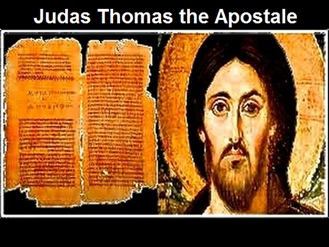
So far we have only covered the dates surrounding the birth of Jesus, that we do have some accounts of the time period historically, though we cannot definitely place Jesus there historically, we can confirm we have records of that time, and what the New Testament tells us, along with the Nag Hammadi Library, that there is a chance that Jesus was a historical person and not a creation of Philo’s Logos by Paul, as Richard Carrier states. The claims that there are no historical records concerning Jesus or that Jesus is based on the Logos is enough to make us want to push on and find out more, so let’s do so. The New Testament does not tell us much of the life of Jesus until the age of 12, and we are only told their family fled from Herod, going to Egypt during these missing years before returning. We actually do have accounts of these early years, though they do not match up to what we are told in the New Testament, and here we must do some investigating to reveal what is most likely the correct situation. Among the Nag Hammadi Library there was the discovery of a scroll by Thomas the Twin (Twin brother of Jesus? We’ll go there soon). In the “Infancy of Jesus” Gospel by Thomas, we are told of the boy Jesus growing up. We are told by Thomas that Jesus was not in Egypt, but Judea (Nazareth) in his youth.
He relates several stories of Jesus, some not so flattering,
such as Jesus being angry with his friend, cursing him dead, and when he was approached for the act, he brought the boy back to life. Another story Thomas relates is of Jesus as a child down by the river on the Sabbath crafting birds out of the mud. A man walks by and sees Jesus breaking the Sabbath and goes to Joseph over it. Joseph goes with the man to the river, finds Jesus breaking the Sabbath, and rebukes him. When Jesus breathes onto the doves it is claimed he brings them to life and they fly off. What is the need of these stories if the early followers of Christianity and Paul did not believe Jesus was a real mortal being? We COULD say it was to show a divine being, but that would show one who was mortal with divine powers, not a spirit god... We do not need to accept the resurrecting of the friend, or the transformation of the birds as factual, it does not matter if either or are true or not, what we are looking at are sources for or against a historical Jesus, which this clearly points to, but still not enough evidence for or against. Though we have some evidence for a young Jesus from Thomas, who was called his twin, could it stand that some other Apostles were siblings of Jesus, indicating a historical Jesus?
Thomas has Jesus’ family in rural Judea growing up, yet we are told in Matthew (2:13-23) that Mary and Joseph fled to Egypt and did not return until Jesus was a youth. Only one account c an be correct and to figure out which one, we must ask a few questions. Why doesn’t Thomas mention Jesus in Egypt but his accounts take place in Judea? How does Thomas know about these accounts? Why does Matthew tell us Egypt? It would make sense that Thomas must be correct that Jesus was raised in Judea and not in Egypt as Matthew says. There is no logical reason to place Jesus in Egypt unless it was to explain Jesus’ survival of Herod’s claimed murder of all infant males under two years of age. We know no such events took place historically, Jesus is never mentioned speaking about being raised in Egypt. It does not fit in historically, as the trip between Egypt and Judea was a very dangerous trip, more so for those with toddlers, as Mary and Joseph would have had. Thomas’ account would seem to be the more logical account, and more than likely correct if Jesus is historical. The reason for this is that Thomas means twin in Greek, and his name was Judas Thomas, the brother of Jesus, or as they would have said in that time period, Judas the twin brother of Jesus. If this is correct, this would not be the first or only family connection for the Apostles and disciples of Jesus. I will cover this next as we know some of the people coming up next are historically proven people. It is claimed by many Christian churches that the cited siblings in the New Testament are half brothers and sisters, either coming from a previous marriage of Joseph’s, or via the marriage of Mary and Joseph. Nowhere in the New Testament or within the Nag Hammadi Library do we find any such claims when the siblings of Jesus come up?
The reason is more than likely because in Judaism,
the Messiah is not a divine being, or a god - demi god,
but a mortal man, and the early gospel writers of the New Testament and Nag Hammadi scrolls would not think twice of this fact. It would not be uncommon if Jesus was a real historical person, that he would have brothers and sisters. James, a known Apostle of Jesus, known as the Just as also well known as the brother of Jesus, used in the literal term, not a spiritual or religious term. We know that James was also the brother of Judas Thomas, the same Thomas mentioned earlier, as well as the brother of Joseph (Joses), and a Simon (Maybe Simon Peter?). Again, as Professor Dale Martin has said, we must know history to deduce what is correct concerning Jesus. What are the chances that the different Christians sects are correct and the siblings of Jesus are only half - brothers and sisters? Historically it would not fit. Could it be a later addition to what has become associated with myth, and trying to place a non - historical person into a historical setting as has been suggested by Richard Carrier and others?
We have looked at some claims and evidence for the existence of a historical Jesus, I do not yet think we have enough information for our investigation to state yes or no, and next week we will continue looking into this claim diving deeper into what historians and scholars present to us.
The A.A. Bruce. N

Comments